
Imagine you are running an application. You have databases, APIs, maybe some third-party integrations. All of them need credentials, like passwords, API keys, tokens. At the beginning, you might store them in environment variables or configuration files. It works fine for a while. But as your application grows, managing these secrets becomes messy and risky. You start wondering, what happens if someone gets access to these credentials? How do you rotate them? How do you even track who is using them? That’s where AWS Secrets Manager comes in.
So what exactly is Secrets Manager, is it just a password vault?
Not really. While it does store secrets securely, it does much more than that. AWS Secrets Manager is a managed service that helps you store, retrieve, and manage sensitive information like database credentials, API keys, and tokens in a secure and controlled way. It integrates with services like AWS Key Management Service to encrypt your secrets, allows applications to access them without hardcoding, and even rotates them automatically using services like AWS Lambda. So instead of just storing secrets, it actively helps you manage their lifecycle.
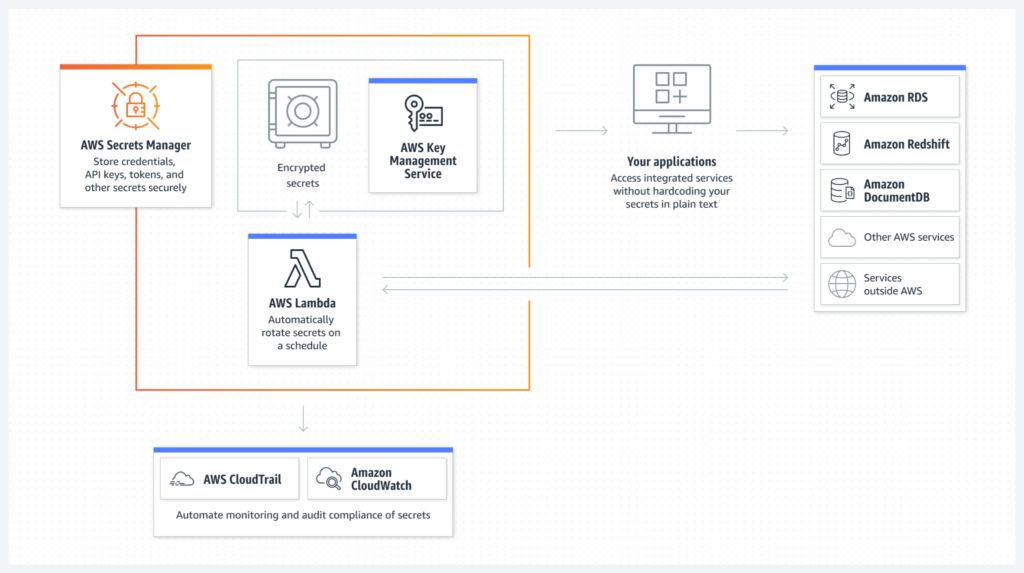
So what exactly is happening here?
In simple terms, your secrets are no longer sitting inside your application or configuration files. Instead, they are stored securely in AWS Secrets Manager, where they are encrypted using AWS Key Management Service. When your application needs a credential, it makes a request to Secrets Manager at runtime and retrieves it securely, rather than hardcoding it. If rotation is enabled, AWS Lambda automatically updates these credentials on a schedule without you having to manually intervene. At the same time, every access and change is tracked using AWS CloudTrail and monitored through AWS CloudWatch. So overall, instead of spreading secrets across your system, everything is centralized, encrypted, automatically managed, and securely accessed only when needed.
Key Features
- Secure storage of secrets: Secrets are stored in an encrypted format using AWS KMS, ensuring they are never exposed in plain text.
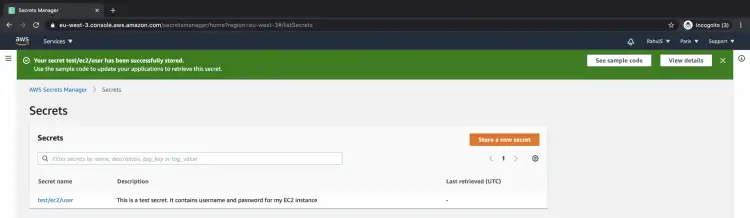
- Fine-grained access control: Access to secrets is controlled using IAM policies, allowing only specific roles or users to retrieve them.
- Integration with AWS services: Works seamlessly with services like RDS, Lambda, and others, allowing applications to fetch secrets securely.
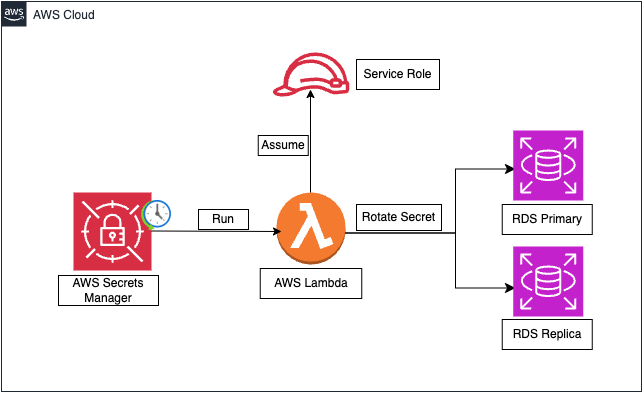
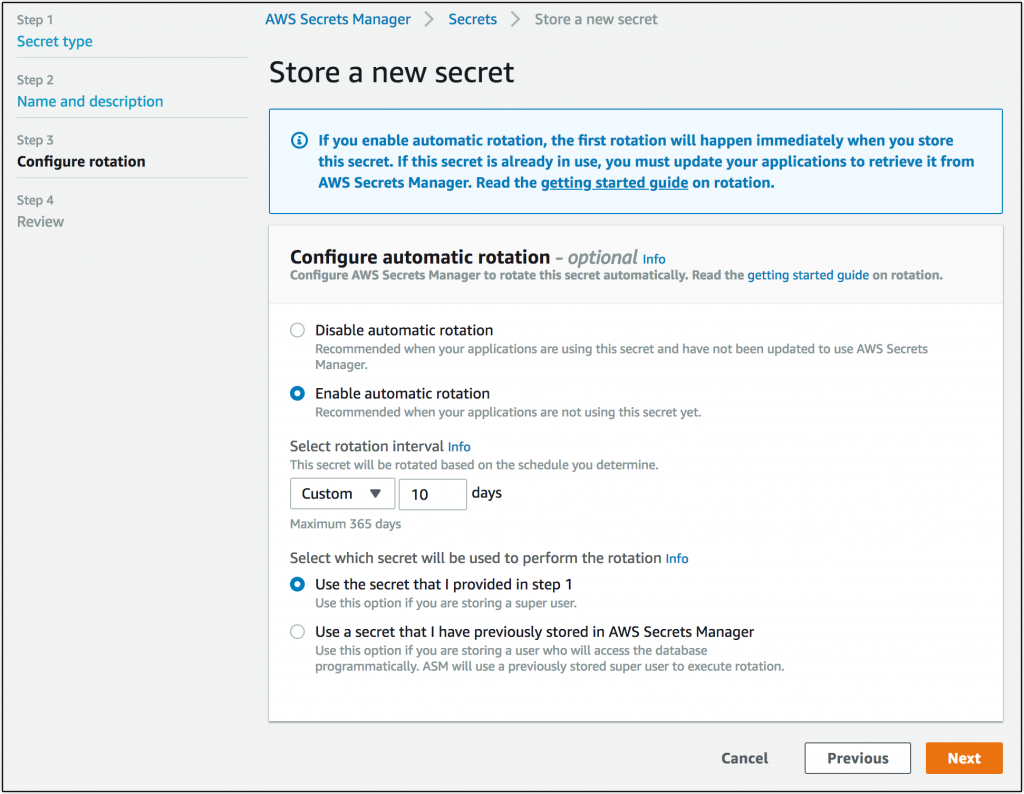
- Automatic rotation: Secrets can be rotated automatically on a schedule using AWS Lambda, reducing the risk of long-term exposure.
- Centralized management: All secrets are stored in one place, making it easier to manage, audit, and update them.
Key Benefits
- Improved security posture: Secrets Manager eliminates the need to store credentials in code or configuration files, which reduces the exposure risk.
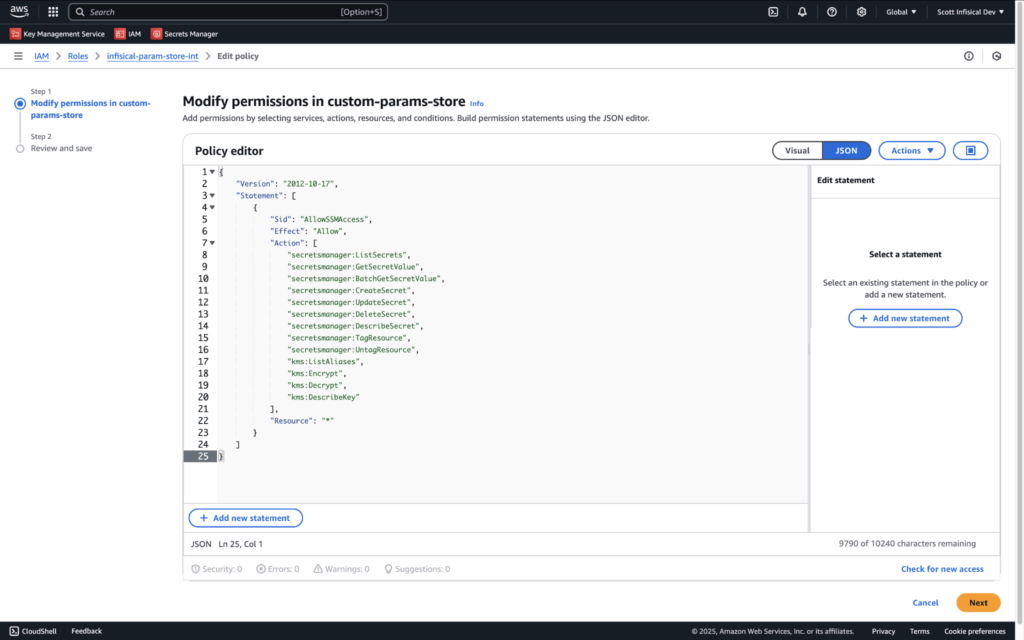
- Better access control: You can ensure that only authorized entities can access sensitive information. We have specific managed IAM permissions/roles that you can enforce to manage access to these keys, so its like you have multiple layers of protection enabled before anyone can access the secrets.
- Reduced operational overhead: You can automatically rotate these secrets and ensure a centralized management that reduces manual effort in handling secrets.
- Scalability: One of the most underrated features is how it can scale as your application grows without adding complexity to secret management.
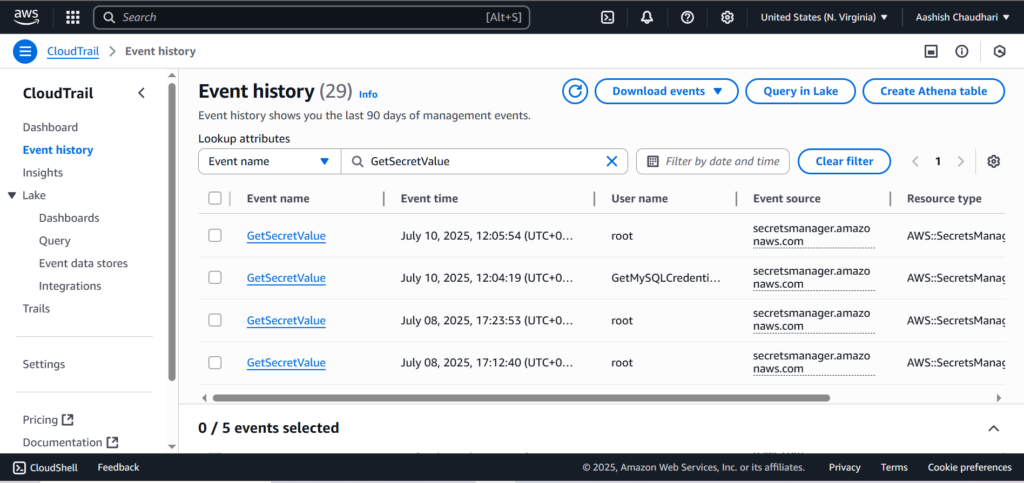
- Audit and monitoring: You can easily integrate it with CloudTrail and CloudWatch which track access and detect unusual activity.
Conclusion
As applications grow, managing secrets becomes one of those things that can quietly turn into a security risk if not handled properly. Instead of spreading credentials across code, configs, and systems, centralizing and automating their management makes a huge difference. AWS Secrets Manager gives you a simple way to do that while keeping security, control, and scalability in place.